Outcome as a Service
Turn one important business outcome intoa governed AI operating program.
A bottleneck, a scorecard, and a path to proof.
Agents are one delivery mechanism inside a managed operating loop that connects people, data, workflows, adoption, and measurement.
A connected program around what the business needs to improve.
Outcome and baseline design
Define the bottleneck, the business owner, the starting condition, and the evidence that will show progress.
Workflow and data build
Connect the process, data, agents, and review steps required to move the work with operational clarity.
Adoption and operating cadence
Equip the people who own the outcome with a practical launch plan, review rhythm, and feedback loop.
Outcome evidence
Use dashboards and scorecards to track what changed, what it cost to run, and what to improve next.
In motion
A better loop for proving what works.
This short overview follows an outcomes pilot from a business bottleneck and baseline through the governed workflow, a review cadence, and evidence for the next decision.
The scorecard distinguishes activity, modeled value, operating cost, and realized results so leaders can decide what should expand.
Use the Outcomes Pilot Scorecard to make the first 90 days concrete.
It gives sponsors, operators, and implementation teams a compact way to agree on the scope, baseline, outcome target, evidence, and review cadence before the work begins.
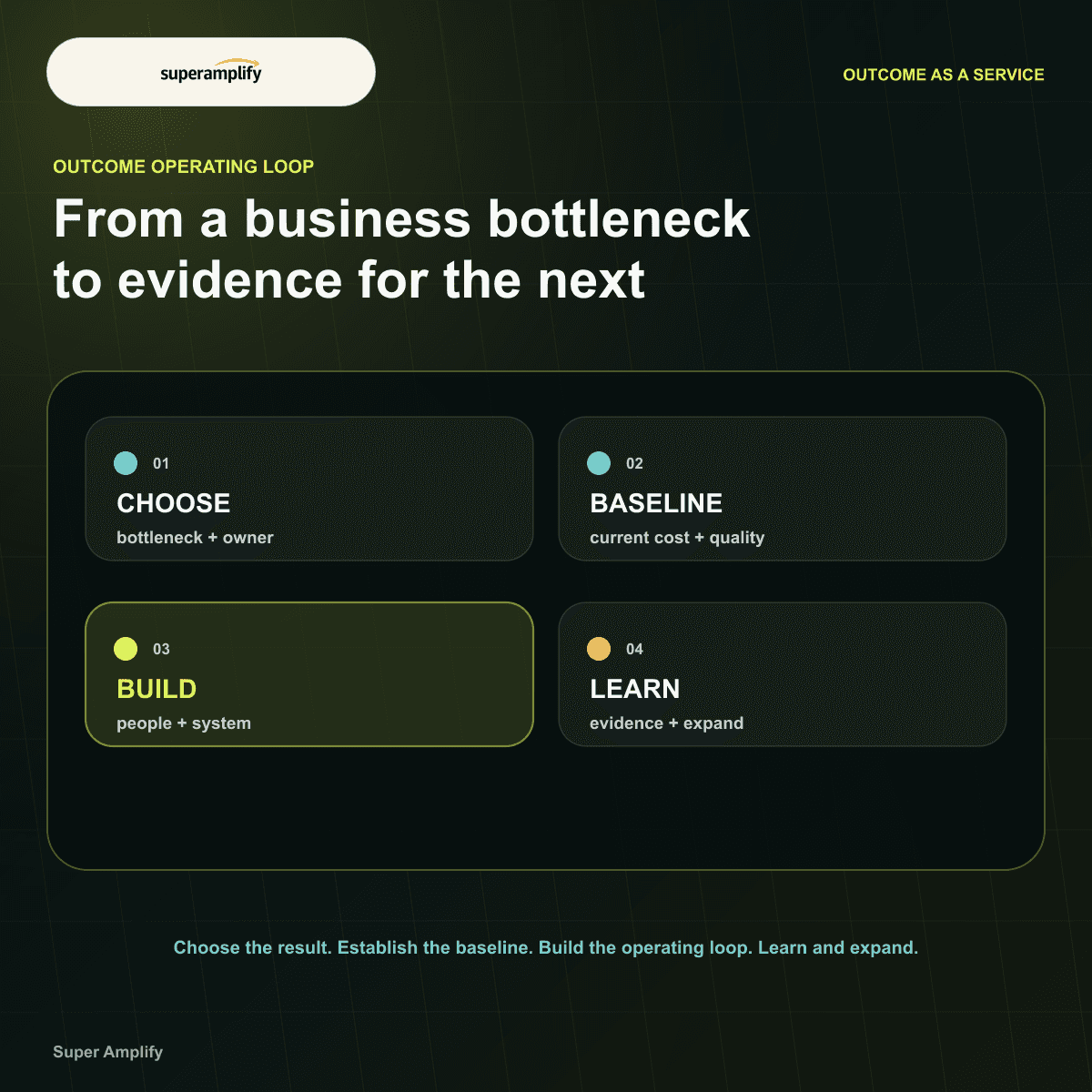
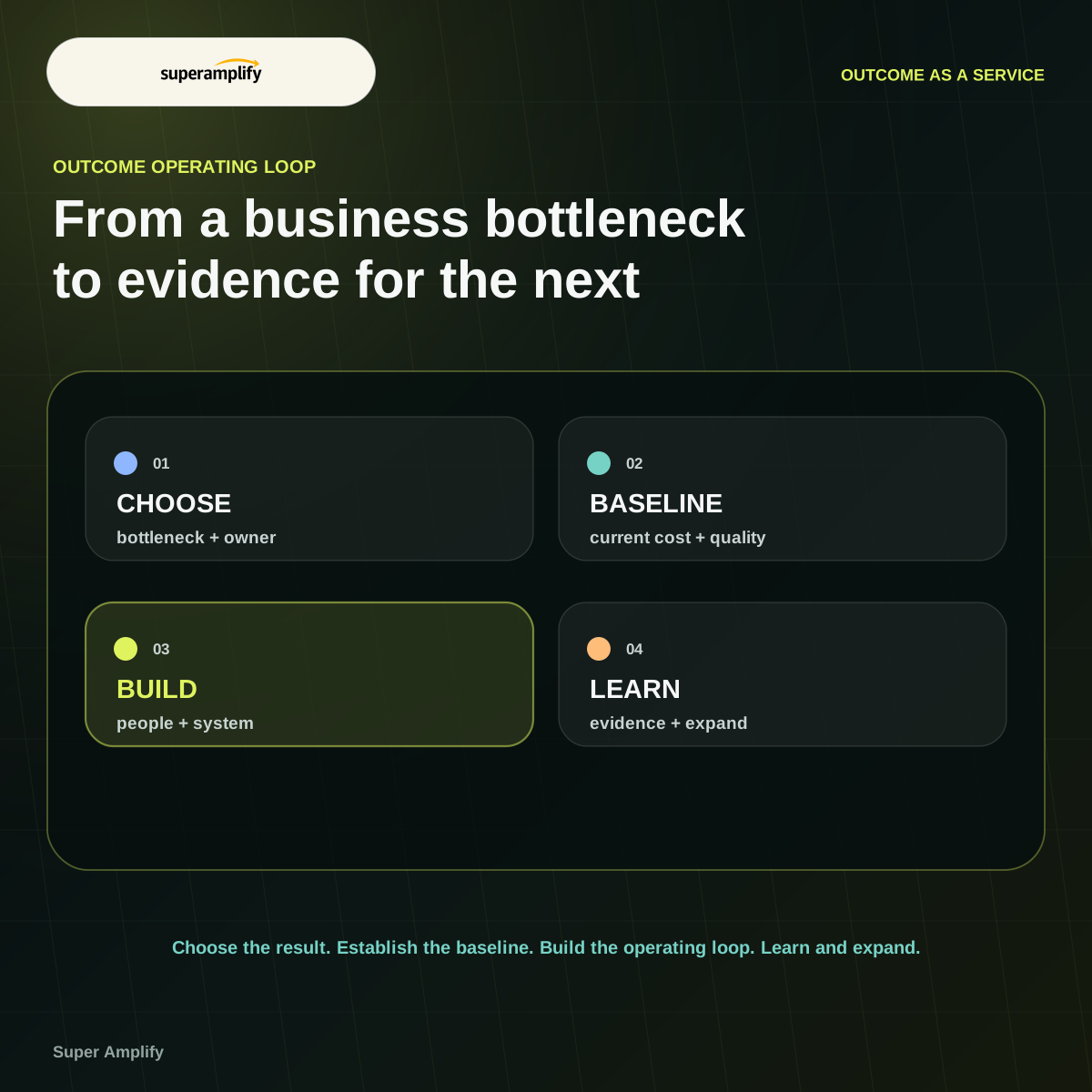
Useful before the first working session.
Outcomes Pilot Scorecard
A one-page template for setting the baseline, owner, target, scope, evidence, and 30-60-90 review path for an outcomes pilot.
Download the pilot scorecardAI ROI whitepaper
A practical guide to separating current cost, build cost, run cost, and realized business value when planning an AI initiative.
Download the AI ROI whitepaperKeep the pilot focused on the evidence leaders need.
Cycle time and throughput
Whether the workflow is moving faster and more reliably from request to completed result.
Quality and rework
Whether the output is more usable, with fewer avoidable loops, corrections, or handoffs.
Current, build, and run cost
How the current process compares with the cost to build, operate, review, and improve the new system.
Adoption and realized impact
Whether the people closest to the work are using it and whether the agreed outcome is actually changing.
We keep baseline, modeled value, operating cost, and realized results separate so teams can make informed decisions as the work evolves.
Start with one bottleneck the business already cares about.
Agents as a Service
Create a role-specific, governed agent team for recurring work before expanding it across a broader outcome program.
Explore Agents as a Service